Chemistry Meets the Panel: Building a Cleaning Spec That Keeps Tempered Glass Under Warranty
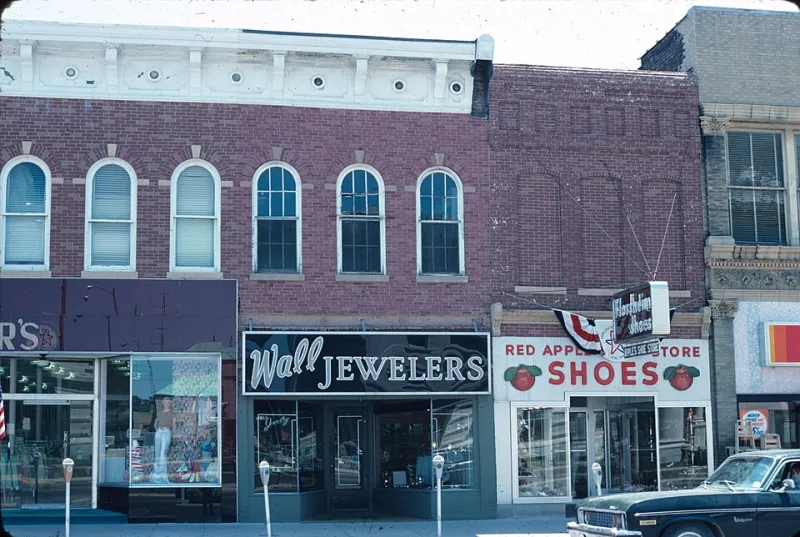
Photo: Indiana Landmarks, CC BY 4.0, via Wikimedia Commons
Most tempered glass disputes we see at TemGlass don't start on the production floor. They start about a year after installation, in a janitorial closet.
A storefront gets cleaned nightly with a chlorine-based degreaser. A pressure washer is dragged out every spring to strip mineral haze off an entry system. Within a season, the panel surface shows micro-pitting and etching that no one documented, no one approved, and no one can easily attribute. When a panel later fails, the manufacturer's warranty review begins with one question: what touched this glass?
The answer, more often than buyers expect, is a maintenance program that was never engineered to match the material.
Why Surface Damage Matters More on Tempered Glass
Tempering works because of the compression layer locked into the outer surfaces of the panel. That compressive skin is what gives tempered glass its four-to-five-fold strength advantage over annealed glass, and it is also why surface integrity is non-negotiable. Any flaw that penetrates the compression layer — a deep scratch, an etched pit, an impact nick — creates a stress concentration that can initiate fracture.
Harsh chemistry compounds the problem in two ways. First, acidic or highly alkaline cleaners (pH below 4 or above 10 for extended contact) can chemically attack the silica surface, leaving etch marks that permanently reduce effective surface strength. Second, hard water left to dry on hot exterior panels deposits mineral bonds that bind to the glass, and the scraping or abrasive pads used to remove them inflict exactly the kind of surface damage the compression layer can't forgive.
A panel that survives installation flawlessly can be quietly downgraded by twelve months of the wrong cleaning routine.
What the Warranty Actually Says
Most US tempered glass warranties contain a maintenance clause, and most of them read something like: damage resulting from improper cleaning, abrasive materials, or contact with chemically aggressive substances is excluded.
That language puts the burden of proof in an uncomfortable place. Facility managers rarely have documentation of what products were used, at what dilution, by which vendor. When a claim is filed, the absence of a maintenance record is itself a defense for the manufacturer.
The fix is contractual, not aspirational. A cleaning and maintenance specification — attached to the glass order, referenced in the handoff package, and acknowledged by the cleaning contractor — converts an ambiguous warranty term into a documented, enforceable standard.
A Maintenance Spec Checklist for Storefront and Door Contracts
We recommend buyers include the following elements in any commercial glazing contract or facility handoff document:
1. Approved chemistry. Specify cleaners with a pH between 5 and 8, explicitly prohibiting hydrofluoric acid, abrasive creams, scouring pads, and razor-blade scraping on coated or tempered surfaces. Brand-name neutral glass cleaners or mild detergent solutions should be named in the spec.
2. Water hardness and spot-removal protocol. In hard-water regions — much of the Southwest, Florida, and the Great Lakes basin — require deionized or softened water for final rinses. Define a spot-removal procedure using approved mild acids with strict dwell-time limits, followed by immediate neutralization and rinse.
3. Pressure-washing limits. Cap washer pressure at roughly 1,500 psi, require a fan tip held at least 24 inches from the glass, and prohibit direct spraying at edges, gaskets, and silicone joints. Sealant and edge seal damage from pressure washing is a separate but common warranty exclusion.
4. Inspection intervals. Require a documented visual inspection every quarter for the first two years, then semiannually — checking for etching, edge chips, seal failure, and any surface anomaly under raking light. Photograph findings and retain records with the warranty file.
5. Vendor acknowledgment. The cleaning contractor signs the spec. This single line item resolves most attribution disputes before they start.
The Inspection Conversation Nobody Schedules
Handoff day is the last moment all parties are in the same room. It is also the best opportunity to schedule the first inspection and circulate the maintenance spec in writing. Contractors who build this step into their closeout process report fewer disputed claims and stronger client relationships — because when a panel does fail, the paper trail answers the question of what touched the glass.
Tempered glass is engineered for predictable performance, and predictable performance depends on conditions the buyer controls long after the truck pulls away. Write those conditions down. The panel will hold up its end of the bargain; the spec ensures everyone else holds up theirs.