The Last Twenty Feet: Why Tempered Panels That Survive the Furnace Die on the Dock
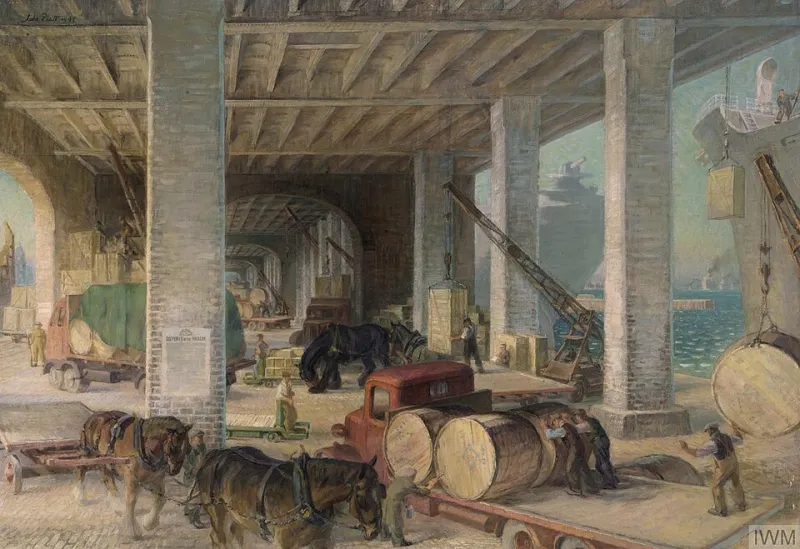
Photo: John Platt, Public domain, via Wikimedia Commons
A tempered panel that passes CPSC 16 CFR 1201 Class II impact testing can absorb a 100-foot-pound blow in the lab. The same panel can be destroyed in under a second by a pallet jack dropped off a loading dock lip. It is a contradiction every glass buyer eventually confronts: certification standards measure what the glass can do, not what happens to it on the way to the building.
The industry has a name for this blind spot, informal but widely understood — the last twenty feet. It is the distance between the trailer and the point of installation, and according to freight handlers and receiving managers interviewed for this article, it is where a disproportionate share of tempered panels are damaged beyond use.
What the Lab Never Tests
Certification protocols are deliberately controlled. ASTM impact tests mount the glass in a fixed frame at a fixed temperature and strike it with a calibrated pendulum. Nothing in that setup simulates a panel being walked off a truck on an A-frame dolly across a heaved sidewalk in a Chicago February.
"We've had panels come off the trailer flawless and get chipped before they crossed the curb line," says a receiving supervisor at a commercial glazing contractor in the Southeast. "The edge nick was so small nobody saw it. Two days later, the panel let go in the rack."
That failure mode — edge damage propagating through tempered glass — is the core vulnerability. Tempering puts the glass faces in compression and the core in tension, which is what gives the material its strength and its safe, granular break pattern. But it also means the tensioned core is always one deep edge nick away from releasing. A forklift tine that kisses the edge of a crate can start a clock that ends in a spontaneous fracture days later, long after the delivery receipt was signed.
The Four Points of Failure
Drawing on interviews with handlers who move architectural glass daily, the dock environment breaks down into four recurring hazards.
The fork itself. Standard forklift forks are wider than most glass crates and often longer. A careless approach can punch a tine through the crate's rear panel and into the glass. Handlers recommend fork-entry zones be marked on every crate and that drivers confirm fork spread before the first approach.
The transition points. Trailer to dock plate, dock plate to floor, floor to threshold. Each one is a vibration event. A panel riding on an A-frame that rocks across a misaligned dock plate absorbs that shock through its edges.
The dolly and the sidewalk. Site deliveries without dock access mean glass goes onto wheeled A-frames or slabs dollies and travels whatever surface the city provides. Expansion joints, tree roots, and curb cuts translate directly into torsional loads on a rigid panel.
The human factor at the threshold. The single most common break, per several handlers surveyed, is a door threshold: a two-inch step, a dolly wheel catches, the panel tips, and the corner takes the fall.
A Receiving Checklist That Holds Up
Safety managers increasingly want the receiving process documented, both for freight claims and for liability purposes. A practical checklist looks like this:
- Inspect the crate before opening. Photograph all six sides. Note any fork punctures, crushed corners, or shifted load on the delivery receipt before signing.
- Open on a flat, clear surface. Never pry against the glass face; remove banding with cutters, never a claw tool swung toward the panel.
- Inspect every edge and corner before the panel leaves the crate. Run a gloved hand along the full perimeter. A chip deeper than the glass half-thickness on a tempered edge is a reject, not a touch-up.
- Check the stamp. Confirm the certification logo matches the order documents — a mismatch discovered at installation is a change order; discovered at the dock, it is a claim.
- Move with two people minimum, panel inboard on the dolly, never flat. Route the path in advance and walk it first, checking for thresholds and grade changes.
- Document and retain. Photos of the intact panel, the signed receipt, and the inspection notes go in the job file the same day.
Turning Documentation Into Leverage
There is a commercial argument for this discipline beyond loss prevention. Carriers and suppliers adjudicate freight claims on evidence, and a buyer who can produce timestamped photographs of a damaged crate taken before the receipt was signed is in a categorically stronger position than one who discovered the breakage during install. Several glass suppliers now condition claim eligibility on inspection within a defined window after delivery — a window that closes quickly.
The certifications stamped on a tempered panel tell you it was built to survive a specific, controlled impact. Getting it to the lobby alive is not a materials problem. It is a process problem, and processes are something every buyer can specify, train, and enforce.