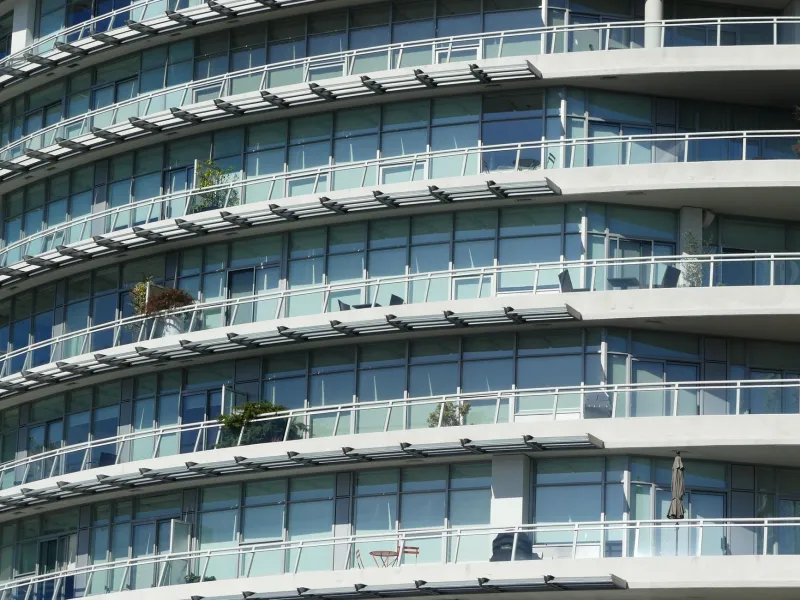
Downsizing Without Downgrading: A Specifier's Framework for Substituting 6mm Tempered Glass in Framed Systems
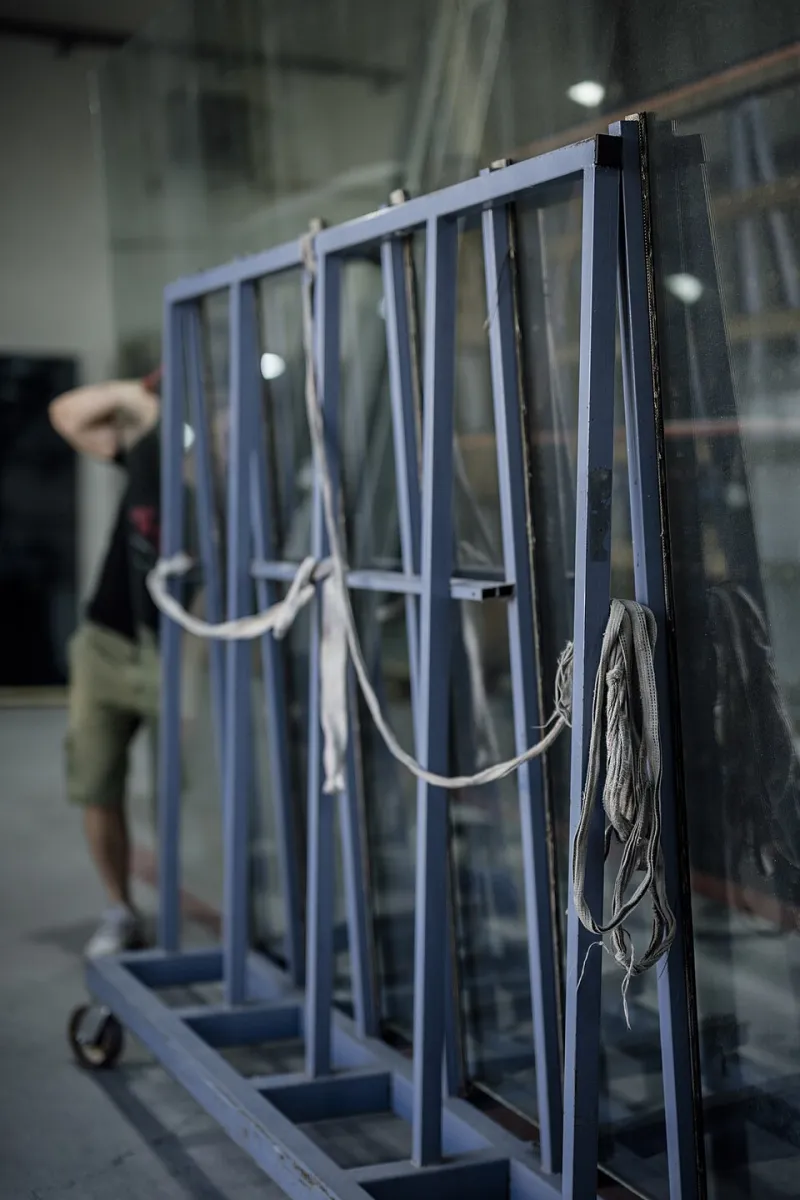
Photo: Shixart1985, CC BY 2.0, via Wikimedia Commons
Walk the floor at any US glass fabricator and you'll hear the same conversation playing out: contractors, squeezed by freight rates and tightening structural budgets, asking whether the 10mm tempered lites on the drawing set could just as easily be 6mm. Ten years ago, the answer was a flat no. Today, it's a genuine engineering question — and answering it well can save thousands per project, while answering it badly can cost far more.
Why the Thinner Option Became Viable
Two forces converged to make 6mm tempered glass competitive in framed applications where 10mm was once the default.
The first is process quality. Modern horizontal roller-hearth tempering lines, with better furnace control and improved quench uniformity, produce surface compression far more consistently than the equipment of two decades ago. A 6mm lite tempered to ASTM C1048 today routinely achieves the full 24,000 psi minimum surface compression with fewer edge-quality defects — the historical weak point of thin glass.
The second is modeling. Load calculations under ASTM E1300 have grown more sophisticated, and framed systems that support glass on all four edges distribute wind and dead loads far more efficiently than the assumptions baked into older rules of thumb. Many specifiers carrying 10mm in framed conditions are simply inheriting a legacy spec, not a calculated one.
The Economics Are Not Trivial
The weight difference is dramatic: 6mm glass weighs roughly 16.4 pounds per square foot versus about 27 pounds for 10mm — a 40% reduction. On a 2,000-square-foot curtain wall package, that's over 21,000 pounds less glass to freight, lift, and set. Lighter lites mean smaller crews, lower crane time, reduced structural loading on substrates, and fewer handling-related breakage claims. For interior framed partitions and storefront systems in the US market, freight alone can swing the bid by several points.
Where the Substitution Works
Not every application justifies the swap, but these conditions favor going thin:
- Framed interior partitions and office fronts. Short spans, four-edge support, and modest loads make 6mm tempered the workhorse here. Many US office fit-out specs have already made the switch.
- Framed storefront lites at grade with wind exposure well below design maximums. Where E1300 calculations confirm capacity with margin, 6mm performs.
- Framed spandrel and non-vision panels where impact and deflection demands are low.
- Projects where weight limits matter — retrofit conditions, elevated floors, or buildings with older structural capacity.
Where You Should Push Back
The savings evaporate — or reverse — when these red flags appear:
- Large unsupported spans. Deflection, not breakage, is the killer for thin glass. Excessive flex under wind load can disengage gaskets, crack sealant, and rattle in the frame long before the glass fails.
- Point-supported or minimal-frame systems. Concentrated loads at fittings demand thickness; 6mm is frequently out of scope here.
- High-impact or vandal-prone locations. Ground-floor glazing in transit corridors, schools, and sports facilities warrants laminated or heavier construction regardless of calculated capacity.
- Acoustic requirements. Mass matters. Thin glass will underperform any STC target, a topic we've covered in detail elsewhere.
- Handrail, guard, and overhead applications. Code pathways for these assemblies typically assume greater thickness — treat any substitution as a formal engineering review, never a value-engineering shortcut.
A Four-Question Framework Before You Sign the Change Order
- Is the support condition fully framed on four edges, with gaskets or glazing tape rated for reduced glass thickness? If the framing system was designed around 10mm, confirm the bite and setting blocks still work.
- Does an E1300 calculation — not a habit — support the thinner lite with adequate deflection margin? Get it in writing from the engineer of record.
- Does the application carry any code-mandated impact or security requirement? If yes, stop.
- Does the total cost math hold after re-fabrication, re-approval, and schedule risk? A substitution that triggers resubmittal and a two-week delay may cost more than it saves.
The Bottom Line
Downsizing from 10mm to 6mm tempered glass is no longer a gamble; it's a legitimate specification decision when the physics and the framing support it. The suppliers winning this work are the ones who can run the load calculations, flag the edge cases, and tell a buyer when not to make the swap. Ask for the engineering behind the recommendation — and treat legacy thickness on your drawings as a question to be answered, not an answer to be inherited.