Guard Loads and Glass Views: What Multifamily Developers Owe Their Balcony Railing Specs
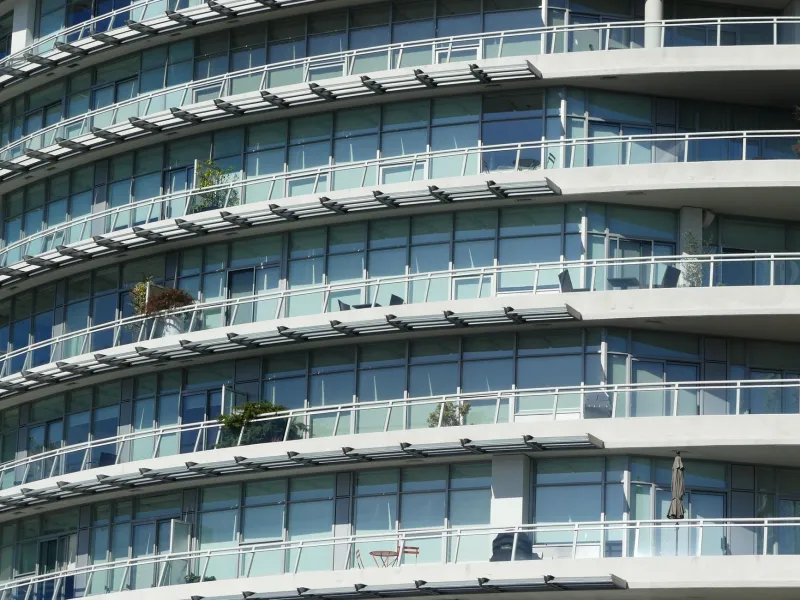
Drive past any apartment or condominium project under construction in Austin, Denver, or Charlotte and you will likely see the same silhouette: a concrete slab edge wrapped in panels of glass with no visible balusters, rails, or pickets. Frameless tempered glass railing systems have moved from a luxury upgrade to a near-default specification in multifamily housing, and the shift is reshaping how developers, glazing contractors, and property managers think about guard design.
The reasons are commercial as much as architectural. Open sightlines photograph well, and in a leasing market where a unit's balcony view can justify a meaningful monthly premium, an unobstructed rail line is an asset. But the trend also raises real technical and contractual questions that buyers should resolve long before the first panel is crated.
The Code Baseline: What IBC Demands of a Glass Guard
Guards in the United States are governed primarily by the International Building Code, and the requirements are not negotiable at the leasing office. Under IBC Chapter 16, guards must resist a concentrated load of 200 pounds applied at any point along the top rail — or, for frameless systems, along the top edge of the glass itself — alongside a uniform horizontal load typically of 50 pounds per linear foot. Where the glass also serves as the walking surface or is subject to impact, ASTM E2358 and the code's impact provisions come into play.
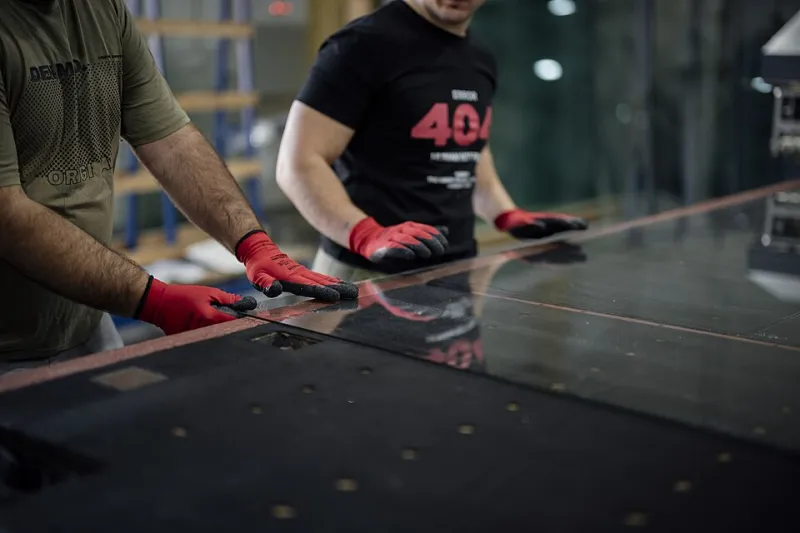
For frameless systems, the engineering burden concentrates at the base shoe. The panel is clamped or embedded in a structural channel, and every pound of the 200-pound top-edge load transfers through the glass into that shoe and into the slab. This is why panel thickness matters: most code-compliant frameless balcony guards in the US market use 10mm or 12mm fully tempered glass, sometimes heat-soaked to reduce the risk of spontaneous breakage from nickel sulfide inclusions. Developers who accept a thinner panel to shave cost are often accepting a shorter panel span, more posts, or a marginal structural calculation that will not survive plan review in a strict jurisdiction.
Specifiers should also note that local amendments vary. Coastal markets from Miami to the Carolinas layer wind-borne debris and corrosion requirements on top of the guard loads, and a system approved in one state may need re-engineering a few hundred miles away.
The Rent-Check Math Behind the Spec
Why are developers willing to pay for heavier glass and engineered base shoes? The answer shows up in pro formas rather than in code books.
Marketing teams consistently report that units with unobstructed views lease faster and command higher rents. A traditional picket rail visually slices a skyline; a frameless glass panel does not. In competitive urban submarkets, that difference can translate into a premium of anywhere from modest to substantial on the affected units, multiplied across hundreds of balconies over the life of the asset. When weighed against the incremental cost of the glazing package — typically a small fraction of total project cost — the return calculation often favors glass.
There is a secondary benefit: perceived openness. Glass guards make small balconies and mezzanine landings feel larger, a genuine advantage in the space-constrained floor plans that dominate current multifamily design.
The risk in this math is that the premium is only real if the system stays clear, intact, and compliant. That is where contracts matter.
Maintenance Realities Property Managers Should Contract For
Tempered glass guards are low-maintenance compared with painted steel or wood balustrades, but low-maintenance is not no-maintenance. Property managers inheriting a glass railing package should insist on four things from the supplier and glazing contractor:
-
A documented cleaning protocol. Hard-water staining and mineral deposits on exterior panels are the most common complaint in the field. A written spec covering approved cleaners and cleaning frequency — particularly in hard-water regions of the Southwest — protects both appearance and warranty coverage.
-
Gasket and shoe inspection schedules. The base shoe and its setting blocks are the structural heart of a frameless system. A contract that defines periodic inspection intervals, and who bears the cost of adjustment, prevents disputes later.
-
Panel replacement lead times. Tempered panels are cut and fabricated before tempering; a broken panel cannot be field-modified. Suppliers who commit to replacement lead times in writing give managers a predictable path back to full occupancy after damage.
-
Warranty clarity on edge damage and spontaneous breakage. Nickel sulfide inclusions are rare but real, and the boundary between warranty coverage and owner expense should be written down, not argued about.
A Trend Built on Engineering, Not Just Aesthetics
The rise of frameless glass guarding in multifamily housing is not a fashion cycle that will reverse. It is the product of mature codes, proven structural hardware, and a leasing market that pays for views. But the systems that deliver that return are the ones specified with correct panel thickness, engineered base shoes, and contracts that anticipate the maintenance decade, not just the lease-up quarter.
Buyers who treat the railing package as a commodity will discover the difference at the first plan review — or the first warranty claim. Buyers who treat it as engineered safety glazing, backed by a supplier who understands IBC guard loads and multifamily service realities, will capture the premium the glass view was supposed to deliver.