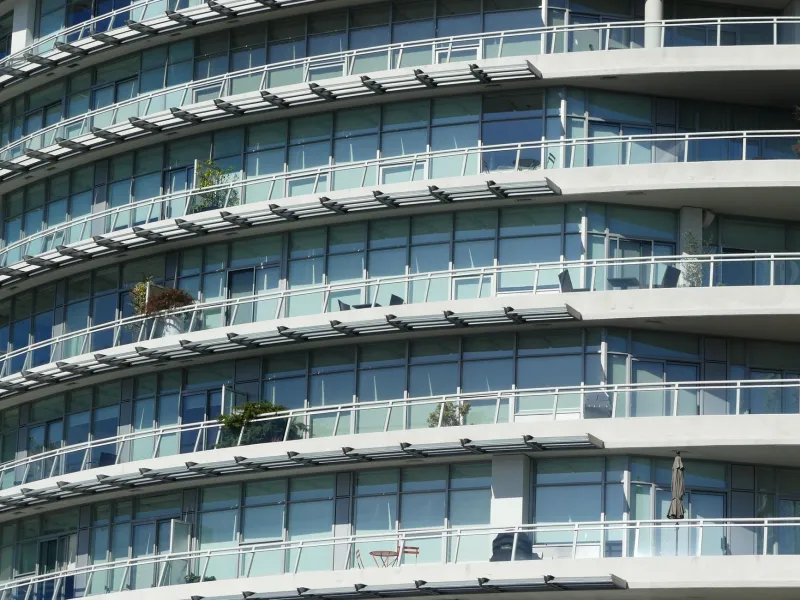
Inside the Numbers: What a Tempered Glass Quote Is Really Telling You
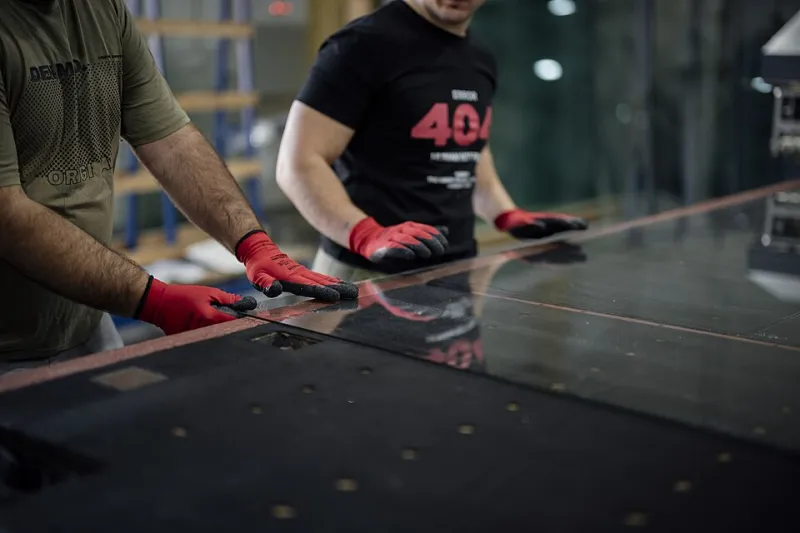
Photo: Shixart1985, CC BY 2.0, via Wikimedia Commons
Every buyer eventually runs into the puzzle: two quotes for what looks like an identical tempered glass order, separated by a gap too wide to blame on rounding. One shop comes in at $14 a square foot, another at $20, and neither is padding the number in any obvious way. The difference is not mystery or margin-grabbing. It is anatomy — and once you can see the parts, the spread starts to make sense.
This article is an argument, not just an explainer. Buyers who understand how fabricators actually build a price stop shopping quotes like commodities and start using them as negotiating and scheduling tools. In a market where lead times matter as much as dollars, that understanding is worth more than any single discount.
Yield: The Silent Multiplier
Before a panel is ever tempered, it has to be cut — and cutting is a geometry problem. Float glass arrives at the fabrication shop in jumbo and standard sheets, typically 96 by 130 inches or larger. Every order competes for real estate on that sheet.
A run of 24-by-36-inch panels cuts cleanly into a sheet with minimal offcut. A run of 51-by-29-inch panels — an odd dimension driven by an architect's elevation drawing — can strand 30 percent of the sheet as scrap. The fabricator has already paid for that full sheet, so the scrap gets priced back into your quote.
Here is the practical takeaway most buyers miss: dimension changes of even two inches can shift you into a different cutting yield, and the quote moves with it. If your specification is flexible at the edges, say so early. A fabricator who can nest your panels efficiently on a sheet often has room to sharpen a price that looked immovable.
The Oven Runs on Density
Tempering is a batch process. Panels ride through a furnace on ceramic rollers, and the economics depend on how much glass occupies each cycle. A dense, well-packed batch spreads the energy cost, the roller wear, and the cycle time across many square feet. A sparse batch — one oversized panel or a small run of odd shapes — burns the same furnace time for a fraction of the output.
This is why two shops can price the same panel differently based on nothing more than what else is in their queue. A fabricator already running a compatible batch can treat your panels as incremental volume. A shop that has to dedicate a cycle to your order cannot.
It is also why lead times fluctuate in ways that seem irrational from the outside. Batch density is scheduling, and scheduling is capacity. Ask a fabricator how your order fits their furnace queue and you will learn more about your real delivery date than any promised turnaround will tell you.
Edge Work: Where Hours Hide
Flat-polish edges, pencil grinds, notches, and cutouts are labor line items, and labor is where fabrication quotes diverge most. Automated edging machines make a straight polish nearly free at volume. Hand detail work around hinge cutouts or clip notches is measured in minutes per panel, and those minutes multiply across a run.
A quote that lumps "edge treatment" into a single per-foot number may be averaging a simple grind with someone else's complex detail work. If your order includes anything beyond a standard edge, ask for it broken out. You may find that the expensive part of your quote is eight notches per panel, not the glass itself — and that a minor design revision eliminates most of the cost.
Freight: The Zone Problem
Glass is heavy, fragile, and priced by carriers as both. Freight costs scale with zone — the distance band a shipment crosses — and with crate weight, which includes the lumber and A-frame racks, not just the glass.
A regional fabricator 200 miles from your job site may quote $300 in freight on an order a national supplier delivers for $900, simply by crossing fewer zones. That is frequently the entire explanation for a headline price gap between two "identical" quotes. When comparing bids, always separate glass cost from delivered cost, and confirm whether the freight quote is binding or an estimate subject to rebilling.
Why This Matters More in 2025
Tariff pressure on imported float glass, volatile energy costs, and a tighter domestic fabrication base have all narrowed the margin for error in pricing. Fabricators are repricing more frequently, and quotes that once held for 30 days may now hold for 10. Buyers who understand the underlying cost drivers can ask better questions: Is this quote locked against raw material movement? Does the batch schedule support my installation date? Is there yield relief if I adjust a dimension?
Read the Quote Like a Fabricator
Three habits will change how your next bid lands:
- Ask for the yield assumption. If your panel sizes are negotiable, efficient nesting can move the price more than competitive bidding will.
- Ask about the batch. A shop that can run your glass with existing work is faster and often cheaper than one that cannot — even at a higher unit price.
- Separate glass, fabrication, and freight. Every comparison you make is cleaner when the components are visible.
A tempered glass quote is not a single number. It is a compressed summary of sheet geometry, furnace scheduling, labor minutes, and freight zones. Buyers who read it that way do not just find a better price — they find the fabricator whose constraints actually fit their project, which is the only discount that holds through delivery.