Schedule Is the New Price: Why Response Time Decides Tempered Glass Contracts
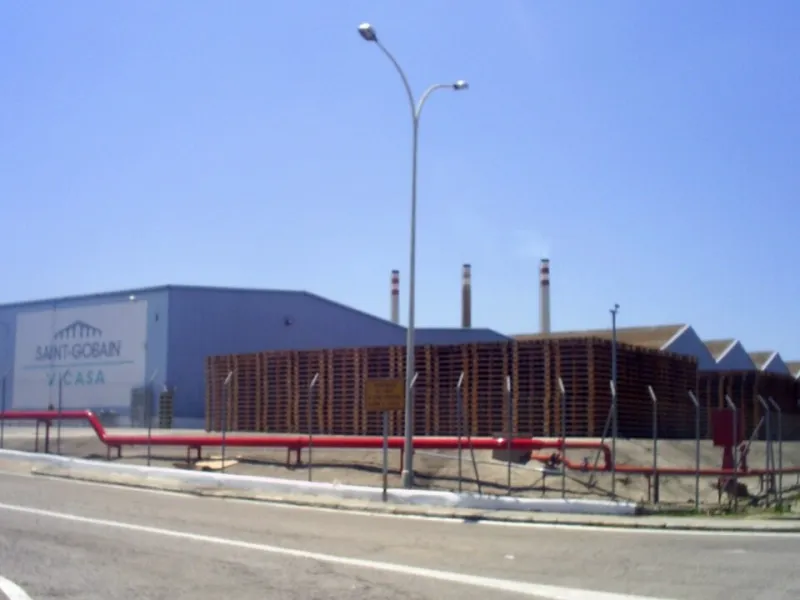
Photo: Mao06, CC BY-SA 3.0, via Wikimedia Commons
Ask a glazing contractor what closed their last tempered glass order and the answer is rarely a discount. More often, it is a promise: confirmed capacity, a firm ship date, and a supplier who returned a complete quote before the competition finished calling references. In today's US market, the fabricator who answers fastest frequently wins — even when their number comes in higher.
The Evidence: Speed Outweighs a 10% Premium
Industry purchasing surveys have shown for years that lead time ranks at or near the top of supplier selection criteria for construction materials, ahead of unit price. The logic is straightforward. A glass package that arrives two weeks late doesn't just delay one trade; it can push drywall, flooring, fixtures, and final inspection down the critical path. On a commercial build carrying daily general-contractor penalties or a hard tenant-improvement deadline, a 10% price difference on a $40,000 glass order is noise compared to a week of schedule slippage.
Buyers have internalized this math. Procurement teams now score fabricators on quote turnaround, order acknowledgment, and historical on-time delivery — metrics that were rarely formalized a decade ago. Fabricators who publish realistic lead times, rather than optimistic ones, are quietly building the loyalty that used to belong to the low bidder.
Where the Calendar Actually Goes
Understanding lead time means understanding the four stages every tempered order passes through:
1. Cutting (1–3 days once in queue). Jumbo sheets are cut to size on CNC tables. The stage itself is fast; the wait to enter the queue is not.
2. Edgework (1–4 days, order-dependent). A standard flat grind adds little time. Polished edges, bevels, notches, and cutouts add both machine time and handling, which is why edge specifications made after the quote can add days to the schedule.
3. Tempering (1–2 days in the furnace cycle). The tempering furnace is the bottleneck of the entire industry. It is a fixed-capacity asset — a fabricator can add cutting tables, but furnace hours are finite. Orders are batched by thickness and size to maximize loading, so a small custom order may wait for the right batch.
4. Shipping (1–5 days). Glass moves on dedicated A-frame trucks or LTL freight. Cross-country lanes, particularly to or from the West Coast, can add nearly a week before the first panel reaches the job site.
For a routine commercial order, a two-to-three-week total lead time is typical among US fabricators. Complex laminated or insulated tempered assemblies can run four to six.
Seasonality: The Backlog Rhythm
Lead times in this industry breathe with the construction cycle. Spring and early summer — when break-ground projects across the Sun Belt and Midwest all reach their glazing phase simultaneously — push fabricator backlogs to their longest. Orders placed in March may carry quotes with four-week production windows that quietly stretch to six.
By contrast, the late-fall and midwinter slowdown in northern markets opens capacity. Buyers with flexibility can lock better delivery commitments — and sometimes better pricing — by scheduling glass orders against the seasonal trough rather than the peak. Retail buildouts racing toward holiday openings are the notable exception: their Q3 demand collides with everyone else's, which is precisely why early ordering matters most for that segment.
Questions to Ask Before You Commit
A schedule-critical order deserves more diligence than a price comparison. Before signing, put these questions to any prospective fabricator:
- What is your current furnace backlog, in days — not weeks? A specific number signals a fabricator who tracks its own capacity honestly.
- Is the quoted lead time from order entry or from approved drawings? Approval delays are the most common cause of missed ship dates, and they belong to the buyer, not the supplier.
- What is your on-time delivery rate over the last twelve months? Reputable fabricators measure it; many will share it.
- Which edgework and fabrication steps happen in-house? Outsourced edge processing adds a hidden transit and queue stage the quote may not reflect.
- What is the escalation path if the ship date slips? A supplier with a real answer — partial shipment, expedited freight at shared cost, priority re-queuing — is a supplier who has managed delays before.
The Takeaway for Buyers
Price still matters, particularly on large repeat orders where cents per square foot compound. But for the schedule-driven work that defines most US commercial construction, the decisive variable is no longer the quote — it is the calendar behind it. Buyers who evaluate fabricators on demonstrated response speed and verified on-time performance, and who order ahead of the seasonal peak, will find that a modest premium buys the one thing a discount never can: a delivery date the project can actually be built around.